Nielsen ratings have always been the currency by which television establishes value to rights holders that ultimately sell advertising to…
Sometimes It’s Not About Business
I’m going to beg your indulgence here as I write a blog that’s much more personal than valuable. I understand if those of you seeking sports marketing insight don’t read this, but I hope some of you will let me share an experience I had this past month in the wilderness north and west of Flagstaff, south of the Grand Canyon.
The landscape here is rolling conifers of juniper and ponderosa, interspersed with smaller mountains that pale in size and grandeur compared to San Francisco Peak, which dominates the skyline to the east. On most days, the wind blows steadily, and this time of year it’s common for it to rain in the afternoon.
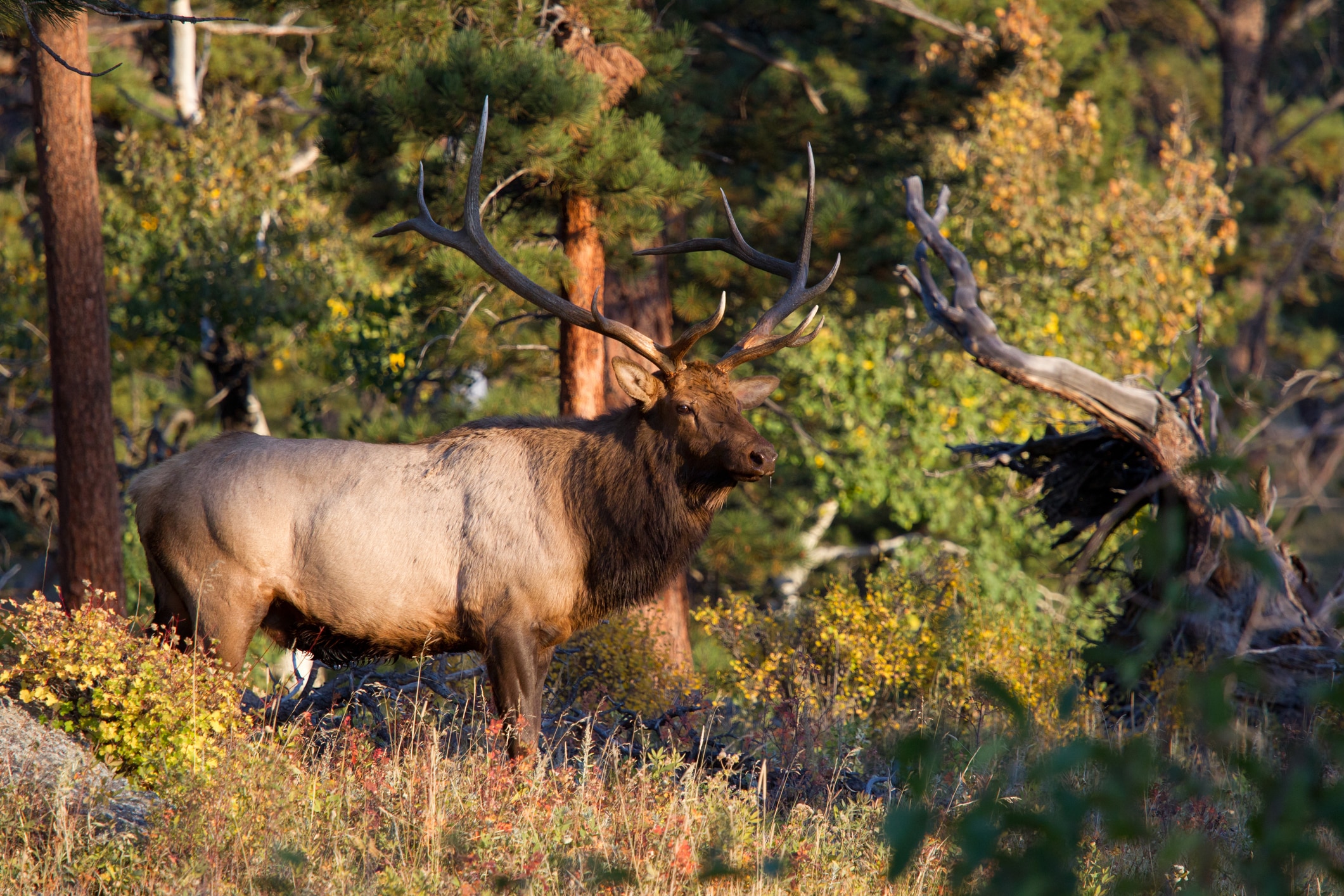
It is breathtakingly beautiful and home to elk, deer, pronghorn antelope, mountain lions, and black bear.
This is why I’m here. I drew a coveted bull elk tag for a hunt that happens during the ‘rut,’ which is the term that describes the mating season for cervidae, which is the scientific term for deer, elk, and moose. Rocky Mountain Elk are the largest cervidae in Arizona and the second largest in North America.
For what it’s worth, I am self-taught, having gained both an interest and an inexplicable primal need to learn hunting during COVID. I have hunted elk three other times in the past six years. Those hunts lasted up to two weeks; all but one ended in futility.
Fortunately, or perhaps unfortunately, this hunt lasted a little over a week, counting the days of scouting and field prep I did before the hunt began. I hired an outfitter named Red Wilson, a friend of a friend. He owns Arizona Premier Outfitters; he is an Army veteran and the absolute epitome of a modern-day mountain man. It took less than 10 minutes for us to become fast friends and for me to see the value of the investment in hiring him.
Red spent time understanding my abilities as a hunter and my desires for the animal I’d like to harvest. Given my age, my physical condition, and the frequency one gets a tag in a premium unit, he ascertained that we’d target a herd bull the first half of the hunt and settle for something less if we didn’t have success. To call Red gifted is an understatement. He was a true professional who knew the animal as well as he knew the terrain. For me, I’d be hunting with someone who would teach me how to stalk, how to call, and how to shoot the bull elk of my dreams.
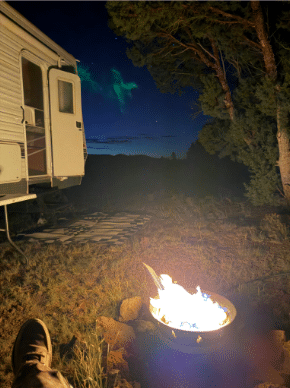
Red and I left camp at 3AM on the first day. We drove for quite some time on the dirt roads in the unit. We stopped, walked, listened, and still had time to drive further to put ourselves in proper position before the sun rose. We walked roughly two miles in the dark through the junipers to set up in a clearing where we started bugling to signal a threat to any bulls in the area. Two responded in short order.
To describe the sound a bull elk makes during the rut and the absolute chill sent through both your body and mind is virtually impossible if you’ve never experienced it. Imagine sitting in the forest before first light, with only a very small field of vision and hearing this animal nearby. To get an idea, click this link and turn your volume as high as it gets.
I could spend the remainder of this blog describing my elevated heart rate, my attempt to suppress my breathing, and the absolute rush of anticipation as I expected my prey to make its way to our calls. For me, this feeling is unique to hunting, especially bowhunting where your mental capacity and your physical state must stay aligned. You count on the ingrained redundancy of practice but you can never recreate the moment when the animal you’re hunting shows itself for the first time.
Neither bull would come. Both answered our calls, but neither would commit to coming our way. As we made our way to what we thought was the larger of the two, a bugle from Red resulted in the telltale rustling of a large animal coming through the brush. I took cover and prepared to shoot as an enormous bull elk came thundering in. He was magnificent…a young, majestic animal magnified by proximity.
“Don’t shoot that bull…” said Red, loud enough to send the animal running.
Tagging out on opening day is not necessarily unusual or, from what Red taught me, not necessarily desirable either. We’d have other opportunities with bigger bulls. This was not the herd bull we were targeting.
The day went from hot and dry to wet and cold in no time. We spent the rest of the day stalking bulls who were both vocal and active in the on-again, off-again rain. I shivered, sweated, and shivered again as my light camouflage kept me hidden but not comfortable. We glassed from the hilltops, we walked for miles, and even crawled for over 200 yards to attempt a shot that never came that day. It’s hard to describe the mental and physical fatigue that came as the sun set on that first day.
2026 Elk Hunt, Day 2
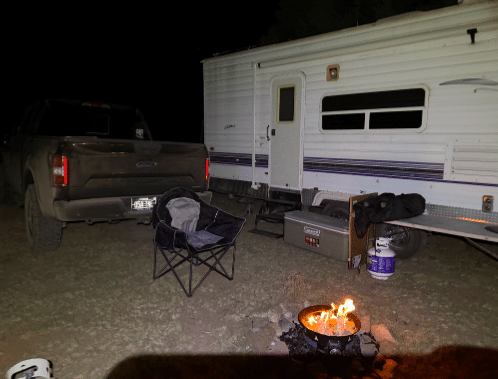
Despite the comforts of a camp trailer, sleep had not been easy in the Arizona wilderness. After our first day of hunting, I slept well for the first time in a week. When my alarm sounded at 2:15AM I could hear the wind blowing hard and gave thought to another rough day in elements that Mother Nature uses to protect her from human intrusion.
Out the door and in the woods by 330AM had us walking into a valley thick with ponderosa pines. We could hear the telltale bugles of rutting bulls in the distant valley. Red gauged the wind and formulated our plan. We’d hike some 3 miles downhill and downwind of where he thought the elk were. The haunting wails of the bulls were intermittent; each was met with a complete reassessment of our trajectory as well as a resolve to walk in the darkness in complete silence. This seemed impossible to me, but Red taught me how to move slowly and quietly. The dark, the wind, and the rain from yesterday masked our presence, and as the sun began to show first light, we had made our way to where we wanted to start our stalk in earnest.
150 yards away in a sizable clearing were two ‘satellite’ bulls. Satellite bulls are junior to the herd bull, smaller in stature, and lower on the mating list for cows in estrus. Both were head down feeding. The nearest one had a magnificent 5×5 rack and the stature of what hunters would call a ‘shooter.’ With a silent nod, we began our painstaking stalk along a tree line that would get us close. This took the better part of an hour. At 65 yards, I prepared myself to take the shot. As I shifted my weight, the slight snap of a small twig alerted him to our presence. He lifted his head and looked in our direction for over 5 minutes while we held still and breathless, trying to remain unseen. He made a visible and audible snort before trotting away.
This is hunting. Maximum effort that leads to failure way more than success.
As the sun brought light to the day, we moved deeper into the valley to where we could hear cow calls from what would turn out to be the rest of a herd of about 18 elk. As we moved slowly and silently into a position to assess them, the rack of the herd bull flashed just over a ridge. We immediately went to the ground, hoping the tall grass would mask our presence. Red had us crawl to a nearby copse of mixed conifers that would afford us a great vantage point if the herd kept coming our way.
When hunting big game, movement must be minimized. We balanced speed with the need to be stealthy to take what we thought was a great position on a herd moving our way. Once again, controlling the emotions, exhaustion, and need to execute, I assumed an advantageous shooting position should our target bull come into view.
It was not to be.
Hunting public lands is just that, public. A group of inexperienced hunters was trying to stalk the same herd without having the wind gauge. Like a protective picket, the cows winded the men, and the herd took to the hoof. In a thundering stampede, the herd made their way to safety up and away from all of us.
Disappointment yet again.
We moved off, dejected but understanding that it’s not our forest and that the privilege of hunting it was not exclusive. Red was already assessing his map for our next move, feeling that a roundabout hike back to the truck was in order. Admittedly, we walked with heavy boots up through the valley, thinking our opportunity here was not to be. After what felt like a couple of miles of walking uphill, we stopped for water and a map check. Movement on a nearby ridge proved to be the herd we had been on earlier. The elk were still being pushed, moving away from the inexperienced hunters to high ground and safety. We took notice that the herd bull was not with them.
We moved up the ridge quickly but failed to gain cover when the magnificent beast came into view. He had taken his natural position to the rear of his herd, as his size and the rut had slowed him considerably.
He never saw us.
At 75 yards, he changed course from directly towards us to angling slightly away. We held completely still as the circumstances unfolded in our favor. I moved slowly and methodically to take my shot as Red whispered his distance. I shot him at 50 yards. Upon reflection, it was probably advantageous that everything happened so quickly. I drew my breath and released the arrow. It found its mark with an audible crack known only to hunters.
This is the most difficult part of the story.
Hunting success is initially met with elation. Red had seen the shot hit and was certain it was fatal. We hugged and high-fived as though we had just won some type of sporting event. My immediate concern was recovery. I knew I had hit a trophy bull of my dreams, but the forest was unforgiving in giving up its treasures. Finding our elk in the dense brush and rugged terrain would be our next challenge; my elation quickly turned to concern.
For those of you who don’t know. Once you hit an animal with an arrow, you are to note the direction it runs and wait up to an hour (sometimes longer) for it to lie down and pass. Red was confident that he heard the bull go down shortly after the shot, so we made our way to the ridgeline where there was no blood, no trail, no sign of where it ran. He immediately began scanning the terrain below us with his binoculars while I looked for blood on the wet grass.
Nothing.
My thought was to wait, but Red felt very confident that what he heard was the telltale sound of a hunt that was over. We made our way down the ridge where I could see a downed tree, an unnatural patch of brown, and the distinguished outline of an enormous set of horns. My trepidation turned to relief, followed by the difficult emotions that come with harvesting a majestic animal of this size.
“Blessed are You, our God, who has kept us alive, sustained us, and brought us to this moment.”
- Hebrew Prayer
So many days went into preparing myself for this … so many steps taken, so many disappointments, so many failures led to this success. I consider myself stoic, but the emotions of the moment were overwhelming.
And this is how it should be.
I will continue no further. Just know that the work begins upon recovery, and the better part of the day was spent transporting and processing the animal. It took 5 of us to move him. His estimated weight was 1,100 pounds, which is both rare and impressive. His mount will adorn my cabin above the fireplace, and his meat will fill my freezers … more importantly, his spirit will leave an indelible mark on me as a memory of a lifetime.
Ed cherishes his time in the outdoors. He has bought, sold, and consulted on sports sponsorships for over 30 years. If you’re looking to learn more about how you can make your sponsorship investment more impactful, or if you’d like to ask Ed where to go fishing, contact him at ed.olsen@linedrivesportsmarketing.com.
YOU MIGHT ALSO BE INTERESTED IN...